Tuesdays with Edwards!
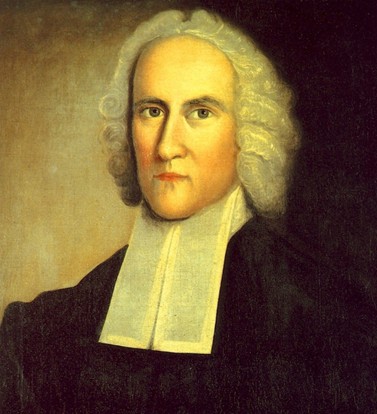
A Treatise Concerning
Religious Affections is one of Edwards’ most widely read and influential works, and has come to be viewed as a classic in Christian literature; its popularity and influence attested to by the fact that since its original publication in 1746 it has never been out of print.
In the second part of his book, Edwards outlines twelve signs which neither prove nor disprove one’s affections to be truly gracious. For each of these signs, Edwards shows why a spiritually healthy Christian would and even should exhibit these signs; and then shows why it should not be looked at as a certain sign that it is a proof of saving grace…though sometimes he reverses the order and does the negative before the positive.
So far we have seen that Edwards believed it doesn’t prove one way or the other that religious affections are truly spiritual because:
- They are raised very high.
- They have great effects on the body.
- They cause one to talk a lot about God and religion.
- They inexplicably come about.
- They come with passages of Scripture being brought to mind.
- That there is an appearance of love in them.
- That there are many kinds of religious affections together.
For the last three weeks we have been looking at Edwards’ eighth false positive: “that comforts and joys seem to follow awakenings and convictions of conscience, in a certain order.”
In today’s post, Edwards concludes his argument that while there may well be an “ordinary way” that God works—first bringing conviction of sin, hopelessness, and even terror and then bringing joy and peace afterwards—it is no sure sign that saving grace is what is being experienced. The final sentence sums his position up well: “We are often in Scripture expressly directed to try ourselves by the nature of the fruits of the Spirit; but nowhere by the Spirit’s method of producing them.”
You can read Religious Affections in its entirety at www.edwards.yale.edu. This selection is from Religious Affections, ed. John E, Smith, The Works of Jonathan Edwards, vol. 2 (New Haven: Yale University Press, 1959) Pages 159-162.
***
Thirdly, we have no certain rule to determine how far God’s own spirit may go in those operations and convictions which in themselves are not spiritual and saving, and yet the person that is the subject of them, never be converted, but fall short of salvation at last. There is no necessary connection in the nature of things, between anything that a natural man may experience, while in a state of nature, and the saving grace of God’s Spirit. And if there be no connection in the nature of things, then there can be no known and certain connection at all, unless it be by divine revelation. But there is no revealed certain connection between a state of salvation, and anything that a natural man can be the subject of, before he believes in Christ. God has revealed no certain connection between salvation, and any qualifications in men, but only grace and its fruits. And therefore we don’t find any legal convictions, or comforts following those legal convictions, in any certain method or order, ever once mentioned in the Scripture, as certain signs of grace, or things peculiar to the saints; although we do find gracious operations and effects themselves, so mentioned, thousands of times. Which should be enough with Christians, who are willing to have the Word of God, rather than their own philosophy, and experiences, and conjectures, as their sufficient and sure guide in things of this nature.
Fourthly, experience does greatly confirm, that persons seeming to have convictions and comforts following one another in such a method and order, as is frequently observable in true converts, is no certain sign of grace. I appeal to all those ministers in this land, who have had much occasion of dealing with souls, in the late extraordinary season, whether there han’t been many who don’t prove well, that have given a fair account of their experiences, and have seemed to be converted according to rule, i.e. with convictions and affections, succeeding distinctly and exactly, in that order and method, which has been ordinarily insisted on, as the order of the operations of the Spirit of God in conversion.
And as a seeming to have this distinctness as to steps and method, is no certain sign that a person is converted; so a being without it, is no evidence that a person is not converted. For though it might be made evident to a demonstration, on Scripture principles, that a sinner can’t be brought heartily to receive Christ as his Savior, who is not convinced of his sin and misery, and of his own emptiness and helplessness, and his just desert of eternal condemnation; and that therefore such convictions must be some way implied in what is wrought in his soul; yet nothing proves it to be necessary, that all those things which are implied or presupposed in an act of faith in Christ must be plainly and distinctly wrought in the soul, in so many successive and separate works of the Spirit that shall be, each one, plain and manifest, in all who are truly converted. On the contrary (as Mr. Shepard observes), sometimes the change made in a saint, at first work, is like a “confused chaos”; so that the saints “know not what to make of it.” The manner of the Spirit’s proceeding in them that are born of the Spirit, is very often exceeding mysterious and unsearchable: we, as it were, hear the sound of it, the effect of it is discernible; but no man can tell whence it came, or whither it went. And ’tis oftentimes as difficult to know the way of the Spirit in the new birth, as in the first birth: Ecclesiastes 11:5, “Thou knowest not what is the way of the Spirit, or how the bones do grow in the womb of her that is with child: even so thou knowest not the work of God, that worketh all.” The ingenerating of a principle of grace in the soul, seems in Scripture to be compared to the conceiving of Christ in the womb (Galatians 4:19). And therefore the church is called Christ’s mother (Canticles 3:11). And so is every particular believer (Matthew 12:49–50). And the conception of Christ in the womb of the blessed Virgin, by the power of the Holy Ghost, seems to be a designed resemblance of the conception of Christ in the soul of a believer, by the power of the same Holy Ghost. And we know not what is the way of the Spirit, nor how the bones do grow, either in the womb, or heart that conceives this holy child. The new creature may use that language in Psalms 139:14–15, “I am fearfully and wonderfully made. Marvelous are thy works: and that my soul knoweth right well. My substance was not hid from thee, when I was made in secret.” Concerning the generation of Christ, both in his person, and also in the hearts of his people, it may be said, as in Isaiah 53:8, “Who can declare his generation.” We know not the works of God, that worketh all. “‘Tis the glory of God to conceal a thing” (Proverbs 25:2), and to have his path as it were in the mighty waters, that his footsteps may not be known: and especially in the works of his Spirit on the hearts of men, which are the highest and chief of his works. And therefore it is said, Isaiah 40:13, “Who hath directed the Spirit of the Lord, or being his counsellor hath taught him?” ‘Tis to be feared that some have gone too far towards directing the Spirit of the Lord, and making out his footsteps for him, and limiting him to certain steps and methods. Experience plainly shows, that God’s Spirit is unsearchable and untraceable, in some of the best of Christians, in the method of his operations, in their conversion. Nor does the Spirit of God proceed discernibly in the steps of a particular established scheme, one half so often as is imagined. A scheme of what is necessary, and according to a rule already received and established by common opinion, has a vast (though to many a very insensible) influence in forming persons’ notions of the steps and method of their own experiences. I know very well what their way is; for I have had much opportunity to observe it. Very often, at first, their experiences appear like a confused chaos, as Mr. Shepard expresses it: but then those passages of their experience are picked out, that have most of the appearance of such particular steps that are insisted on; and these are dwelt upon in the thoughts, and these are told of from time to time, in the relation they give: these parts grow brighter and brighter in their view; and others, being neglected, grow more and more obscure: and what they have experienced is insensibly strained to bring all to an exact conformity to the scheme that is established. And it becomes natural for ministers, who have to deal with them and direct them that insist upon distinctness and clearness of method, to do so too. But yet there has been so much to be seen of the operations of the Spirit of God, of late, that they who have had much to do with souls, and are not blinded with a sevenfold veil of prejudice, must know that the Spirit is so exceeding various in the manner of his operating, that in many cases it is impossible to trace him, or find out his way.
What we have principally to do with, in our inquiries into our own state, or directions we give to others, is the nature of the effect that God has brought to pass in the soul. As to the steps which the Spirit of God took to bring that effect to pass, we may leave them to him. We are often in Scripture expressly directed to try ourselves by the nature of the fruits of the Spirit; but nowhere by the Spirit’s method of producing them.

 Learning To Be Full Of Grace And Truth.
1 Comment