Yesterday was full of all sorts of unexpected surprises so I was not able to get my usual post on Jonathan Edwards up. Let’s remedy that right now. It may be Wednesday but it is time for….
Tuesdays with Edwards!
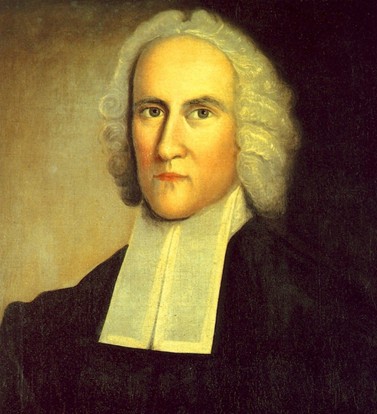
A Treatise Concerning Religious Affections is one of Edwards’ most widely read and influential works, and has come to be viewed as a classic in Christian literature; its popularity and influence attested to by the fact that since its original publication in 1746 it has never been out of print.
In the second part of his book, Edwards outlines twelve signs which neither prove nor disprove one’s affections to be truly gracious. For each of these signs, Edwards shows why a spiritually healthy Christian would and even should exhibit these signs; and then shows why it should not be looked at as a certain sign that it is a proof of saving grace…though sometimes he reverses the order and does the negative before the positive.
So far we have seen that Edwards believed it doesn’t prove one way or the other that religious affections are truly spiritual because:
- They are raised very high.
- They have great effects on the body.
- They cause one to talk a lot about God and religion.
- They inexplicably come about.
- They come with passages of Scripture being brought to mind.
- That there is an appearance of love in them.
- That there are many kinds of religious affections together.
This week we look at Edwards’ eighth false positive: “that comforts and joys seem to follow awakenings and convictions of conscience, in a certain order.”
With this one Edwards spends significantly more time, in part because his own conversion experience and the religious affections that came with it did not follow the accepted norm. Because of this, Edwards himself struggled with the reality of his own conversion for some time. While Edwards was willing to concede that many people experience a similar order in their affections when they come to Christ, making any specific order of experience the “right,” “preferred,” or “best” order is a mistake. In other words, there is a difference in Edwards’ mind between saying “this is how God ordinarily works in the saint” and “this is how we should expect to see God to work.”
In today’s post, Edwards shows through an overview of Scripture why it is reasonable to think that there is an “ordinary way” that God works: first bringing conviction of sin, hopelessness, and even terror and then bringing joy and peace afterwards.
You can read Religious Affections in its entirety at www.edwards.yale.edu. This selection is from Religious Affections, ed. John E, Smith, The Works of Jonathan Edwards, vol. 2 (New Haven: Yale University Press, 1959) Pages 151-154.
***
8. Nothing can certainly be determined concerning the nature of the affections by this, that comforts and joys seem to follow awakenings and convictions of conscience, in a certain order.
Many persons seem to be prejudiced against affections and experiences, that come in such a method, as has been much insisted on by many divines; first, such awakenings, fears and awful apprehensions followed with such legal humblings, in a sense of total sinfulness and helplessness, and then, such and such light and comfort: they look upon all such schemes, laying down such methods and steps, to be of men’s devising: and particularly if high affections of joy follow great distress and terror, it is made by many an argument against those affections. But such prejudices and objections are without reason or Scripture. Surely it can’t be unreasonable to suppose, that before God delivers persons from a state of sin and exposedness to eternal destruction, he should give them some considerable sense of the evil he delivers from; that they may be delivered sensibly, and understand their own salvation, and know something of what God does for them. As men that are saved are in two exceeding different states, first a state of condemnation, and then in a state of justification and blessedness; and as God in the work of the salvation of mankind, deals with them suitably to their intelligent rational nature; so it seems reasonable, and agreeable to God’s wisdom, that men who are saved, should be in these two states sensibly, first, that they should sensibly to themselves, be in a state of condemnation, and so in a state of woeful calamity and dreadful misery, and so afterwards sensibly in a state of deliverance and happiness; and that they should be first sensible of their absolute extreme necessity, and afterwards of Christ’s sufficiency and God’s mercy through him.
And that it is God’s manner of dealing with men, to lead them into a wilderness, before he speaks comfortably to them, and so to order it, that they shall be brought into distress, and made to see their own helplessness, and absolute dependence on his power and grace, before he appears to work any great deliverance for them, is abundantly manifest by the Scripture. Then is God wont to repent himself for his professing people, when their strength is gone, and there is none shut up or left, and when they are brought to see that their false gods can’t help them, and that the rock in whom they trusted is vain (Deuteronomy 32:36–37). Before God delivered the children of Israel out of Egypt, they were prepared for it, by being made to see that they were in an evil case, and to cry unto God, because of their hard bondage (Exodus 2:23 and Exodus 5:19). And before God wrought that great deliverance for them at the Red Sea, they were brought into great distress, the wilderness had shut them in, they could not turn to the right hand nor the left, and the Red Sea was before them, and the great Egyptian host behind, and they were brought to see that they could do nothing to help themselves, and that if God did not help them, they should be immediately swallowed up; and then God appeared, and turned their cries into songs. So before they were brought to their rest, and to enjoy the milk and honey of Canaan, God led them through a great and terrible wilderness, that he might humble them, and teach them what was in their heart, and so do them good in their latter end (Deuteronomy 8:2, 16). The woman that had the issue of blood twelve years, was not delivered, till she had spent all her living on earthly physicians, and could not be healed of any, and so was left helpless, having no more money to spend; and then she came to the great Physician, without any money or price, and was healed by him (Luke 8:43–44). Before Christ would answer the request of the woman of Canaan, he first seemed utterly to deny her, and humbled her, and brought her to own herself worthy to be called a dog; and then he showed her mercy, and received her as a dear child (Matthew 15:22, etc.). The apostle Paul, before a remarkable deliverance, was pressed out of measure, above strength, insomuch that he despaired even of life; but had the sentence of death in himself, that he might not trust in himself, but in God that raiseth the dead (II Corinthians 1:8–10). There was first a great tempest, and the ship was covered with the waves, and just ready to sink, and the disciples were brought to cry to Jesus, “Lord, save us, we perish”; and then the winds and seas were rebuked, and there was a great calm (Matthew 8:24–26). The leper, before he is cleansed, must have his mouth stopped, by a covering on his upper lip, and was to acknowledge his great misery and utter uncleanness, by rending his clothes, and crying, “Unclean, unclean” (Leviticus 13:45). And backsliding Israel, before God heals them, are brought to acknowledge that they have sinned, and have not obeyed the voice of the Lord, and to see that they lie down in their shame, and that confusion covers them, and that in vain is salvation hoped for from the hills, and from the multitude of mountains, and that God only can save them (Jeremiah 3:23–25). Joseph, who was sold by his brethren, and therein was a type of Christ, brings his brethren into great perplexity and distress, and brings them to reflect on their sin, and to say we are verily guilty; and at last to resign up themselves entirely into his hands for bondmen; and then reveals himself to them, as their brother and their savior.
And if we consider those extraordinary manifestations which God made of himself to saints of old, we shall find that he commonly first manifested himself in a way which was terrible, and then by those things that were comfortable. So it was with Abraham; first a horror of great darkness fell upon him, and then God revealed himself to him in sweet promises (Genesis 15:12–13). So it was with Moses at Mount Sinai; first, God appeared to him in all the terrors of his dreadful majesty, so that Moses said, “I exceedingly fear and quake,” and then he made all his goodness to pass before him, and proclaimed his name, the Lord God gracious and merciful, etc. So it was with Elijah; first, there is a stormy wind, and earthquake, and devouring fire, and then a still, small, sweet voice (I Kings 19). So it was with Daniel; he first saw Christ’s countenance as lightning, that terrified him, and caused him to faint away; and then he is strengthened and refreshed with such comfortable words as these, “O Daniel, a man greatly beloved” (Daniel 10). So it was with the apostle John (Revelation 1). And there is an analogy observable in God’s dispensations and deliverances which he works for his people, and the manifestation which he makes of himself to them, both ordinary and extraordinary.

 Learning To Be Full Of Grace And Truth.