Tuesdays with Edwards!
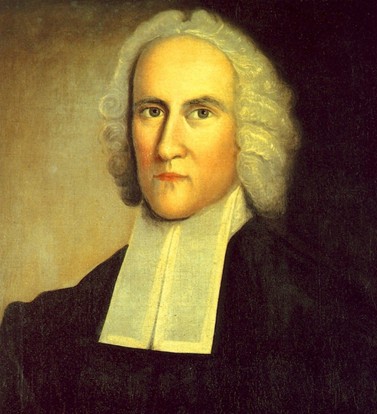
Without a doubt, one of Edwards’ most important contributions was his book A Treatise Concerning
Religious Affections. It is one of Edwards’ most widely read and influential works, and has come to be viewed as a classic in Christian literature; its popularity and influence attested to by the fact that since its original publication in 1746 it has never been out of print.
In Religious Affections Edwards asks a personal and individual question: “What is the nature of true religion? and wherein do lie the distinguishing notes of that virtue and holiness, that is acceptable in the sight of God” (page 84).
The treatise is divided into three parts. Part 1 begins with an exposition of 1 Peter 1:8, from which Edwards concludes that the Scriptures clearly teach “that true religion, in great part, consists in the affections” (page 99).
In part 2, Edwards begins by stating that not all affections are truly “gracious” and therefore it is important to not just be satisfied that one has religious affections, but must know the difference between natural affections that every person can have and gracious affections caused by the gracious work of the Holy Spirit.
Edwards outlines twelve signs which neither prove nor disprove one’s affections to be truly gracious. These are essentially false positives, things that you expect a healthy Christian would be experiencing but are not things we should focus on to gain any assurance that the Holy Spirit is in fact at work in us.
The first of these “no signs” is: “‘Tis no sign one way or the other, that religious affections are very great, or raised very high.” Last week Edwards showed why we should expect affections to be highly raised in Christians. In this week’s selection, Edwards gives the reasons why greatly raised affections should not be looked at as a sure sign of the Spirit’s work.
You can read Religious Affections in its entirety at www.edwards.yale.edu. This selection is from Religious Affections, ed. John E, Smith, The Works of Jonathan Edwards, vol. 2 (New Haven: Yale University Press, 1959) Pages 130-131.
***
And on the other hand, ’tis no evidence that religious affections are of a spiritual and gracious nature, because they are great. ‘Tis very manifest by the holy Scripture, our sure and infallible rule to judge of things of this nature, that there are religious affections which are very high, that are not spiritual and saving. The apostle Paul speaks of affections in the Galatians, which had been exceedingly elevated, and which yet he manifestly speaks of, as fearing that they were vain, and had come to nothing. Galatians 4:15, “Where is the blessedness you spake of? for I bear you record, that if it had been possible, you would have plucked out your own eyes, and have given them to me.” And in the 11th verse he tells them, he was afraid of ’em, lest he had bestowed upon them labor in vain. So the children of Israel were greatly affected with God’s mercy to ’em, when they had seen how wonderfully he wrought for them at the Red Sea, where they sang God’s praise; though they soon forgat his works. So they were greatly affected again, at Mount Sinai, when they saw the marvelous manifestations God made of himself there; and seemed mightily engaged in their minds, and with great forwardness made answer, when God proposed his holy covenant to them, saying, “All that the Lord hath spoken will we do, and be obedient.” But how soon was there an end to all this mighty forwardness and engagedness of affection? How quickly were they turned aside after other gods, rejoicing and shouting around their golden calf? So great multitudes who were affected with the miracle of raising Lazarus from the dead, were elevated to a high degree, and made a mighty ado, when Jesus presently after entered into Jerusalem, exceedingly magnifying Christ, as though the ground were not good enough for the ass he rode to tread upon; and therefore cut down branches of palm trees, and strawed them in the way; yea pulled off their garments, and spread them in the way; and cried with loud voices, “Hosanna to the son of David, blessed is he that cometh in the name of the Lord, Hosanna in the highest’ [Matthew 21:9]; so as to make the whole city ring again, and put all into an uproar. We learn by the evangelist John, that the reason why the people made this ado, was because they were affected with the miracle of raising Lazarus (John 12:18). Here was a vast multitude crying “Hosanna” on this occasion, so that it gave occasion to the Pharisees to say: “Behold the world is gone after him” (John 12:19). But Christ had at that time but few true disciples. And how quickly was this ado at an end? All of this nature is quelled and dead, when this Jesus stands bound, with a mock robe and a crown of thorns, to be derided, spit upon, scourged, condemned and executed. Indeed there was a great and loud outcry concerning him, among the multitude then, as well as before; but of a very different kind: ’tis not then, “Hosanna, Hosanna,” but “Crucify, Crucify.”
And it is the concurring voice of all orthodox divines, that there may be religious affections, which are raised to a very high degree, and yet there be nothing of true religion.

 Learning To Be Full Of Grace And Truth.