Tuesdays with Edwards!
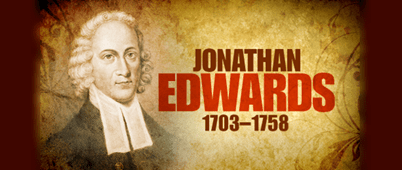
Sometime between August 1728 and February 1729 Edwards preached The Spiritual Blessings of the Gospel Represented by a Feast based on Luke 14:16 Then said he unto him, A certain man made a great supper and bade many. My Tuesdays with Edwards posts have been looking at the ways which show “how gospel provision is well represented by a feast.”
Today’s post looks at the second of several applications of this.
You can read this sermon in its entirety at www.edwards.yale.edu. This selection is from Sermons and Discourses, 1723-1729, ed. Kenneth P. Minkema, The Works of Jonathan Edwards, vol. 14 (New Haven: Yale University Press, 1997) Pages 289-291.
***
III. I would take occasion to invite the poor, the maimed, the halt and the blind unto this feast. We read in the context that the man that made the feast sent forth his servant into the highway and hedges to compel them to come in; and we read in Proverbs 9:1–4 that Wisdom, after she “had killed her beasts” and “mingled her wine” and “furnished her table,” she “sent forth her maidens to say, Whoso is simple, let him turn in hither,” which signifies gospel ministers. We are therefore sent forth in the name of Christ to invite you to come to this feast. Therefore you have sufficient warrant to come from this invitation, and may be sure that you shall be accepted.
You that are natural men are in a very sorrowful doleful condition. Your poverty and misery is beyond expression. You are [more] miserable than if you were beggars in the highway, more than if you were perishing with hunger and thirst, more than if you were maimed and blind and lame. You are in a miserable abject state. You are more loathsome than a beggar clothed with rags and full of sores.
Don’t it move you at all, therefore, what provision God has made for you, what glorious entertainment he has provided for you? Have you no heart to accept of the invitation? Is it not worth the while to be taken from hedges and dunghills and to be clothed with wrought gold and jewels, to dwell in a palace and sit at a prince’s table? Is it not worth the while to accept of any invitation to come to the marriage supper of the Lamb? Blessed and happy are they that enter in with God into the marriage. Yea, is not she blessed that shall be the bride, the Lamb’s wife, to whom it shall be granted to be clothed in fine linen, clean and white, which is the righteousness of the saints (Revelation 19:8)?
You know not how sweet and satisfying the meat and drink of this feast is, and what abundance and variety there is. If you did, you would need no compelling to come; the sense of it would be wings to your feet. You know not what friendship, what communion, what love and joy there is at God’s table. Taste and see that the Lord is gracious: put off your filthy garments; wash yourself from your filthiness; accept of the white raiment Christ offers you; go to Christ and enter with him into his chambers; sit down with him in his feasting and banqueting house.
Here consider two things:
First. You are now invited, but you know not [when Christ will] cease to invite you. You don’t know but Christ may give you over in a very little while. Now the door is open, but if you stay much longer the door will be shut, and you don’t know how soon. And if you stay till then, before you accept of that invitation, you will be sorry for it afterwards: you’ll come and knock at the door, and say, “Lord, Lord, open to us,” and there is nobody will open the door for you.
If you begin to make excuses and won’t come when you may, you can’t come when you will. How was it with them that began to make excuses in our text, beginning with the seventeenth verse: “And he sent forth his servants at supper time to say to them that were bidden, Come: for all things are now ready.” He said afterwards in the twenty-fourth verse, “None of those men which were bidden shall taste of my supper.”
Second. This feast is an eternal feast. You ben’t invited to feast daintily for once, and then [return] to your old beggarly famished condition you were in before; but this royal provision is to be your perpetual entertainment. You may live upon such food forever and ever. You shall enter into the house of God, and you shall go no more out. You have been hungry and thirsty in times past, but if you come to this gospel feast you shall hunger nor thirst no more. Revelation 7:16, “They shall hunger no more, nor thirst any more.” John 6:35, “He that cometh to me shall never hunger; and he that believeth on me shall never thirst.” At God’s right hand there are pleasures forevermore. There you may always eat and drink, and always be satisfied and yet never be glutted. You may eat and drink abundantly and never be in danger of excesses.

 Learning To Be Full Of Grace And Truth.