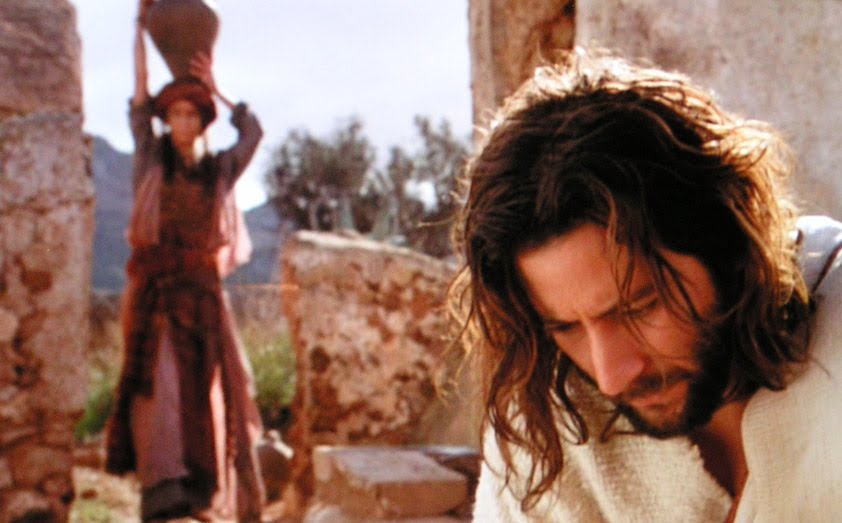
The account of Jesus and the Samaritan woman at Jacob’s well in John 4:1-42 is one a profound and rich passage, and one that is even more illuminating when the cultural backdrop is explained.
Yesterday we covered 4:1-15. In summary…
Jesus left Judea for Galilee to avoid persecution from the Pharisees who were concerned that He was gaining and baptizing more and more disciples than even John the Baptist was. He took the shortest route—through Samaria—something that no Rabbi or religious Jew would have done. He engages in conversation with a very questionable woman at Jacob’s well, something else no Jew let alone a religious leader would have done—even today this would be awkward in that culture. He asks her for a drink. She is surprised that He would even ask. Jesus tells her that if she knew who He was she would have asked Him for a drink and He would have given it to her—water that would both quench her thirst forever and become a spring of living water welling up to eternal life. Jesus’ offer catches her attention—but only the first part it seems, never thirsting again. In other words, she was focused on the personal benefits of the water Jesus was offering…though she couldn’t see how He could give her any without a bucket or canteen of His own.
I like what Kenneth E. Baily says about this in his book, Jesus through Middle Eastern Eyes,
She will be glad to have a magical drink that will conquer her thirst and lighten her daily grind. Religion that will
- ease my psychic pain-and make me feel good
- deliver me from my fear of dying
- lift my depression
- lower crime in society (and make the streets safer for me)
- curb corruption so I don’t have to pay as many taxes
- provide a social community for me and my children—then I will be interested
Religion produces a product. I’ll do my “shopping” and pay for what I want. The woman is not interested in becoming a spring for others—not yet.
Today we pick up where we left off….
Jesus was not offering a pool but a spring of living water. In fact “living water” means water that is moving—a stream or a river as opposed to standing water in a pond or a well. It is the nature of springs to flow out; so Jesus, unconcerned that she does not yet understand what He is doing for her (giving her what she should have asked Him for), He begins the flowing of the spring He is creating in her. Go, call your husband and come back (4:16).
As a woman she could not witness to her husband or to any man. Jesus’ request is very anti-cultural. She counters by saying she doesn’t have one to go back and get (4:17). Jesus’ shocks her yet again by agreeing that she was being honest, but goes on to tell her what she had left out, she had had five husbands and the man she was with now was not her husband. What you have just said is quite true, He says (4:18).
What to do….
She does what anyone in her case would do—change the subject. Sir, I can see that you are a prophet. Our ancestors worshiped on this mountain, but you Jews claim that the place where we must worship is in Jerusalem (4:19-20).
This time Jesus answers her question, and He never returns to the issues of her sin. For centuries, debate had gone on between the Jews and the Samaritans about where the proper place to worship God was. Jesus tells her that while the Samaritans did not have all the knowledge about God they needed to know what God wanted (since they only accepted the books of Moses as Scripture and not the Historical and Prophetic books of the rest of the Jewish Scriptures) the fact of the matter was the question was now moot. Yet a time is coming and has now come when the true worshipers will worship the Father in the Spirit and in truth, for they are the kind of worshipers the Father seeks. God is spirit, and his worshipers must worship in the Spirit and in truth (4:23-24).
While she did not have the benefit of knowing all Scripture, she knew enough to know that the Messiah was coming; When he comes, he will explain everything to us, she says (4:25).
Then Jesus declared, “I, the one speaking to you—I am he” (4:26).
Just then the disciples get back, and for all the reasons we have talked about they were speechless. Why would He put Himself and this woman in such a compromising position? Why would He do it with a Samaritan woman? With this woman? The situation is so unexpected that they keep their questions to themselves (4:27).
But the spring of living water that Jesus was offering has been given and starts its flow. She leaves her jar and runs back into town (4:28), but she does not just go home to the man she was living with, she tells the town. Come, see a man who told me everything I ever did. Could this be the Messiah? (4:29). And they come to see who she is talking about.
The disciples chose to ignore what they just saw and offer Jesus the food they brought back from the market. I have food to eat you know nothing about. What else happened while they were gone they wonder, did someone give Him food?
As the woman thought Jesus was talking about drinking water when He talked to her about living water, the disciples misunderstood what He was talking about. As grace quenches the thirst of the heart, discipleship—loving God, loving others, and helping others do the same—is nourishment that is satisfying to the soul. They had gone into town and got food, but had missed the spiritual feast that God had set before them. Jesus spells it out for them, Don’t you have a saying, ‘It’s still four months until harvest’? I tell you, open your eyes and look at the fields! They are ripe for harvest (4:35).
Verse 39 is stunning, Many of the Samaritans from that town believed in him because of the woman’s testimony. Her testimony should not have meant anything in that culture. But it is the nature of springs to flow outward, and once divine grace starts to flow it begins to multiply. The people ask Jesus to stay, and He does for another two days. The capstone is verse 42, the townspeople tell the woman, We no longer believe just because of what you said; now we have heard for ourselves, and we know that this man really is the Savior of the world.
More on this tomorrow…

 Learning To Be Full Of Grace And Truth.
This is such a classic witnessing story Dan and I am really enjoying your study of it thanks
LikeLiked by 1 person
One of my favorite passages on discipleship. Glad you are enjoying it too. I appreciate the encouragement.
LikeLiked by 1 person