Tuesdays with Edwards!
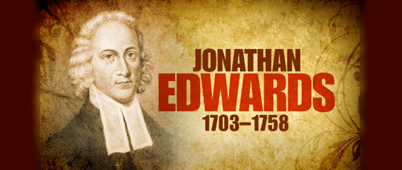
Sometime between August 1728 and February 1729 Edwards preached The Spiritual Blessings of the Gospel Represented by a Feast based on Luke 14:16 Then said he unto him, A certain man made a great supper and bade many. The next several Tuesdays with Edwards posts will look at one of the ways which show “how gospel provision is well represented by a feast.” Last week we looked at how this was true in the expensiveness of gospel blessings. This week’s post looks at the second reason.
You can read this sermon in its entirety at www.edwards.yale.edu. This selection is from Sermons and Discourses, 1723-1729, ed. Kenneth P. Minkema, The Works of Jonathan Edwards, vol. 14 (New Haven: Yale University Press, 1997) Pages 283-284.
***
But we shall show in some particular instances how gospel provision is well represented by a feast….
II. As the guests are freely invited to a feast, so sinners are freely invited to partake of gospel blessings. How much soever the provision has cost God, he requires nothing of us for it. Alas, what should we do if it were required of us to buy those dainties at our own cost? It can’t be purchased with money. “It cannot be gotten for gold, neither shall silver be weighed for the price thereof. It cannot be valued with the gold of Ophir, with the precious onyx, or the sapphire. The gold and the crystal cannot equal it: and the exchange of it shall not be for jewels of fine gold. No mention shall be made of coral, or of pearls: for the price of wisdom is above rubies” (Job 28:15–18).
Alas, what can we do towards purchasing of it? What is all our righteousness to purchase such heavenly dainties? No, we can’t purchase it. Any price that we can offer is as insufficient to buy it, as our power is insufficient to create a world.
And there is no need of our endeavoring such an impossible thing as purchasing of this feast. We are freely invited. God will show the abundance of his divine liberality in the bestowment of it. It is to have most abject thoughts of God and of gospel blessings, to imagine that God would sell them to us for our righteousness.
God invites all freely. Thus we read in our context that those that were poor, those that were in the highways and hedges, were invited to this great supper; such as had nothing to pay, and such as did not pretend to it, it was with such that his house was filled, and by such was his feast eaten. In Isaiah 55:1, all that thirst are invited to “come, and buy wine and milk without money and without price.” Where we have the gospel invitations, they are very generally either to food or drink, as it is here. So it is in John 7:37, “If any man thirst, let him come unto me, and drink.” Revelation 22:17, “And the Spirit and the bride say, Come. And let him that heareth say, Come. And let him that is athirst come. And whosoever will, let him take the water of life freely.”
We are so freely invited to this feast, that there is no other condition required of us in order to our partaking of this feast, but accepting of the invitation, and sitting down at the table, and eating and drinking. Proverbs 9:2–5, “Wisdom hath killed her beasts; she hath also mingled her wine; she hath also furnished her table. She hath sent forth her maidens: she crieth upon the highest places of the city, Whoso is simple, let him turn in hither: as for him that wanteth understanding, she saith unto him, Come, eat of my bread, and drink of the wine which I have mingled.” And in Revelation 3:20, Christ promises that he will come in, and sup with us, and we shall sup with him, if we only hear his voice and open the door.

 Learning To Be Full Of Grace And Truth.