Yeah it’s Thursday. I know. It’s been a busy week for Pastor Dan. But it’s finally time for Tuesday’s with Edwards (special Thursday edition).
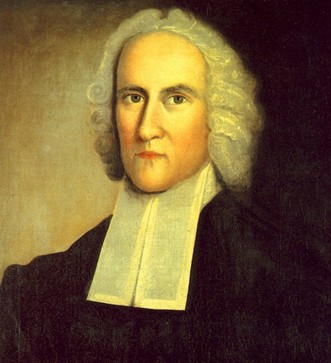
In this 1740 sermon, Mercy not Sacrifice Edwards looks at Matthew 12:7 (KJV), But if ye had known what this meaneth, I will have mercy, and not sacrifice, ye would not have condemned the guiltless. Edwards take on this is that mercy represents our outward moral duty to love to one another and sacrifice is representative of our outward duty of love to God. Edwards takes this to mean that our moral duty to love one another is more essential to Christianity than outward acts of worship. In this selection, Edwards explains that one of the reasons this is true is because the way we show our love to God is by showing love to one another.
You can read Mercy not Sacrifice in its entirety at www.edwards.yale.edu and in Sermons and Discourses, 1739-1742, ed. Harry S. Stout, The Works of Jonathan Edwards, vol. 22 (New Haven: Yale University Press, 2003). This selection is from pages 130-132.
***
If the internal worship of God is more important than internal moral works towards men, then why should not external worship towards God, by equal reason, [be] more important than external moral duties towards men?
Answ. The principal reason is that our goodness and virtue extends not to God as it is does to men. We can’t be profitable or hurtful to God as we may to men. Our virtue profits men.
All that we can do is but to profess our love to God. But as to our love to men, we can do more than profess that. If it was with external duty to men as ’tis with external worship towards God in this respect, that external duty to men consisted in nothing but professing our love to men without any proper deeds of love, as ’tis with external worship of God, then it would be so: then external worship of God would be more important. But our external moral virtue to men would be but little worth indeed, if that was all that it consisted in, that we professed love to men in words and gestures. But the case is far otherwise. Our virtue extends to men, and therefore, these are the most proper external fruits of our virtue. And seeing it can’t extend to God, therefore God has been pleased to appoint us to show our love to him by expressing our virtue towards men, who are within our reach; which is a more acceptable way of doing of it than doing it only [by] professing it in words and gestures.
And how becoming is such a religion of the perfections of the Divine Being. How agreeable is such a revelation to the wisdom, holiness and goodness of God.
And how far is it from being likely to be, as the deists suppose, that the religion that the Scriptures teach is the fruit of the inventions and imaginations of superstitious men, as the papist and the Mahometan religions are. Men’s superstition don’t tend to lay the greatest weight on such duties; but let us look where we will, amongst all nations, we shall see it always has a contrary tendency, viz. to lay the main weight on external acts of worship. So it has always been in all heathen religions everywhere, and so it is among the Mahometans, and so it is among the papists. The Christian religion, the religion taught in the holy Scriptures, is distinguished from all others in this: it lays the chief weight on those things that are indeed of greatest weight according to the wisest dictates of reason. ‘Tis not likely that such a book as the Bible should be the fruit of men’s corrupt minds. Men are exceeding prone to such an imagination that God will be most pleased when men abound in acts of external worship. The vain, self-righteous heart of man is very prone to run into such conceits as the Jews run into. They are ready to say, “Why, surely God will be more pleased with my praying to him, and keeping fasts, and showing great outward respect to him than, my showing mercy to men. God will choose to have such honor himself in the first place.”
How natural is it for men to argue, as the Jews did in Christ’s time, that they might be excused from maintaining their parents if they offered that to God that otherwise might maintain them; and may say to their parents, it is “a gift, by all thou mightest be profited by me” [Mark 7:11].
The Jews did not doubt but they were in the right of it. They thought, “Surely God will be better pleased in my offering my goods in his worship than in offering them to my parents, or any men living.” The contrary doctrine of Christ seemed a mystery to ’em, that they knew not what to make of. And thus ’tis natural for the foolish heart of men to think. And if men had been to have contrived a religion and a book of feigned scriptures of their own hands, they would doubtless naturally have run into such a scheme of things as we see all feigned and false religions have done. But we see the Scriptures do directly thwart this folly and this vanity of the corrupt mind of man; which is an argument that the Scriptures have not vain, superstitious men for their author, but a wise and holy and good God.

 Learning To Be Full Of Grace And Truth.
I agree. And this message goes to straight people as well as gays.
LikeLiked by 1 person
So true. =)
LikeLike