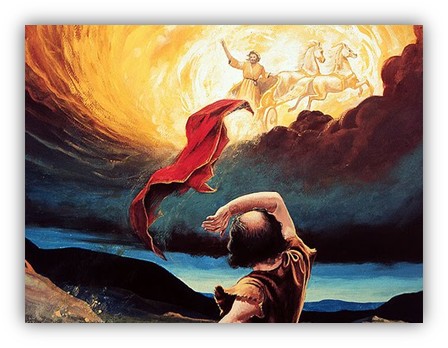
When they had crossed, Elijah said to Elisha, “Tell me, what can I do for you before I am taken from you?”
“Let me inherit a double portion of your spirit,” Elisha replied (2 Kings 2:9, NIV).
What do Joshua, Elisha, Esther, Peter, and Timothy all have in common? Certainly they were all godly people. They are all great examples for us to follow. They were all faithful. Yet there is something else that they all had in common—they all had strong mentors.
- Joshua had Moses.
- Elisha had Elijah.
- Esther had Mordecai.
- Peter had Jesus.
- Timothy had Paul.
What is a mentor? Simply put, a mentor is someone that you have invited (and who has accepted your invitation) to have significant influence into some part or parts of your life. When you think about it, mentoring and discipling have a lot of overlap. Both are intentional. Both are relational. Both require willing submission to the authority of the mentor/discipler. Both require trust and honesty to be effective. The mentor and discipler both work for the good and growth of the mentee/disciple. The mentee and disciple both look to the mentor/discipler for the wisdom, grace, and encouragement to help them mature.
When Jesus commissioned His disciples to make disciples as they went, wherever they went (Matthew 28:19-20) He was telling them to mentor people so that they could live for God through Him, who would then make disciples as they went, wherever they went; as we see when Paul instructed Timothy, You have heard me teach things that have been confirmed by many reliable witnesses. Now teach these truths to other trustworthy people who will be able to pass them on to others (2 Timothy 2:2, NLTse).
When we are talking about spiritual mentoring and discipling, this relationship looks very parental in nature. In fact, the favorite metaphor for discipleship in the New Testament is parenthood. To be discipled is in effect to have a spiritual father or mother. The Great Commission calls all of us to be spiritual fathers and mothers who raise spiritual children into maturity so that they can be spiritual parents.
I have been fortunate to have always had spiritual parents in my life. My parents have been constant spiritual parents throughout my life. Others have been seasonal. When I was a student at Reformed Theological Seminary in Orlando, Dr. Frank James was a spiritual father to me. When I was at Princeton Theological Seminary, Dr. Hughes Oliphant Old became a spiritual father. After that Charlie Jones, Art Stratton, Steve Poole, and most recently David Midwood have been spiritual fathers.
The season for most of these men was tied to where I was living at the time. For two, Charlie Jones and David Midwood, the season ended because they were called Home. Charlie Jones was a salesman, a world renowned speaker and bestselling author. He was one of the best men and best Christians I have ever known. Much of who I am, how I think, and how I act can be attributed to that man. When he died on October 16, 2008 it felt very much like I had lost a father. His death was hard.
David Midwood was a pastor here in New England and had been a mentor to me for the last two years. In addition to our love of Jesus, we shared a love of cigars and scotch. In fact his favorite place to meet with me was at the cigar shop. I never saw his church office. He was a model of grace. I spent several days with him this past July. Several weeks later he was diagnosed with cancer and was gone October 3rd. While I am happy that his suffering was not long and that he is Home with the Lord, his loss has hit me hard too.
Over this week I have been reminiscing about these two men and the impact they had on my life as mentors and spiritual fathers. How many of us have people like this in our lives? People who walk with through life us as Moses did with Joshua or as Paul did with Timothy? How many of us have a Mordecai in our life to help us work through difficult and murky circumstances? How many of us have Elijah’s in our life who leave us thinking “If I could have anything, it would be that God would grant me to be more like him” (2 Kings 2:9), or a person like Jesus who makes us wish “If I could go anywhere, it would be to go where he goes” (John 13:36-37)? If you have people in your life to which you can say “Yeah, I have someone like that,” that is a good sign that you have a spiritual mother or father. That is the kind of depth of relationship that biblical discipleship aspires to, the kind of people God wants us to have in our lives that help us to figure out how to live for God through Christ. I hope we all do.
Losing Charlie and David has been very hard. They were great blessings in my life, and their loss is great. And fact has led me to ask myself: Are there people I am discipling, people who see me as their spiritual father, who would feel similar about losing me? That is a sobering question. That is where we need to be headed in our discipleship with others. We can’t be spiritual parents to many (Jesus had twelve—and He had that “God thing” working for Him!), but we can (and need to be) for a few. Who are your twelve? Who are the people God is calling you to be a spiritual father or mother to? There are too few out there, and the need is great.

 Learning To Be Full Of Grace And Truth.
I have a few mentors. My father, my mother, my son, Sarah, you and many others. It’s odd the places mentors can come from. The oddest two are my son and you. We started on a pretty troubled note a little more than a year ago. But we’ve come a long way and I’ve grown to respect your opinions. My son. Well who would think your child could be a mentor. Mine is, he’s one incredible kid.
LikeLiked by 1 person
I am humbled. =) And odd.
LikeLike