Forgiveness. We all know we need it. We all agree that there are times we need to give it. But what exactly is it?
We are fascinated by the idea of forgiveness in our culture. President George W. Bush, in his inauguration speech, highlighted forgiveness as one of the central characteristics of the American citizen saying, “America, at its best, matches a commitment to principle with a concern for civility. A civil society demands from each of us good will and respect, fair dealing and forgiveness.“ However, in spite of this fascination we seem to only discuss it or tell stories about it as if forgiveness were only a thing in a fairytale. Hollywood has given expression to how elusive forgiveness is in such movies as Clint Eastwood’s Unforgiven and Mel Gibson’s more recent The Patriot. There have even been talk shows solely dedicated to searching for forgiveness such as Forgive and Forget (which did not last long). For all the press we give forgiveness in America, most people seem very mystified about forgiveness and how it works.
Forgiveness is one of those words that gets thrown around a lot in daily conversation, especially amongst us Christians, but when asked to define it, often leaves us wondering exactly what we mean by it. This is exacerbated by the fact that there are so many different ways people explain it. I have heard people say forgiveness is…
…accepting an apology.
…brushing an offense under the rug.
…giving someone a second chance.
…forgetting.
…letting go of your anger.
…not holding a person accountable for what they did.
…accepting that nobody is perfect.
….choosing to move on.
Is it any wonder that we are so confused about what forgiveness means in light of so many varied definitions? And I don’t know about you, but I have found the above definitions to be very unsatisfying. In my experience, people attempting to live out these definitions of forgiveness end up feeling frustrated and defeated. They seem to treat the symptoms but do not heal the disease we are seeking to cure: our hurt, anger, and cry for justice as the one offended, and ridding guilt and shame from the repentant offender.
Ironically forgiveness even seems to be elusive in the church, the very place where forgiveness is supposed to thrive. The truth is, Christians do not have a great reputation for being forgiving. Just ask any passer-by on the street. In his book What’s So Amazing About Grace, Philip Yancey tells the story of a conversation between a friend of his and a prostitute. When he asked why she did not go to the local church for help in her situation she looked at him incredulously and said, “I already feel bad enough as it is why would I go to church and make myself feel worse?“ Many people think the church is a club for good people who have it all figured out with no room for a clinic for people who need love, acceptance and grace.
While there is certainly no shortage of books and articles available on forgiveness, not many are “user friendly.“ As I was writing this, I was going through a book on forgiveness written for “clergy, pastoral counselors and other helping professionals.“ After ten years of theological education, I found the book difficult and cumbersome. Perhaps a degree in counseling was necessary for this one, but that does not help me, or the average person who wants to get a handle on forgiveness.
So what is it? What are we doing when we forgive someone? I can tell you what forgiveness is from a Christian point of view.
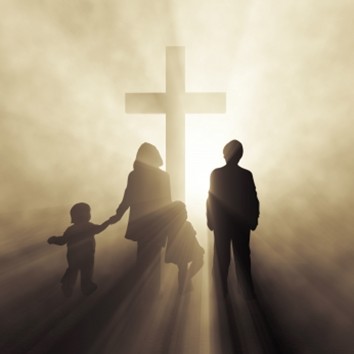
Forgiveness is a supernatural act when you chose to join God in looking at the offender through the cross of Jesus Christ. When we do that, God removes our cry for justice and righteous anger by showing that He took that sin and hurt against us seriously, and emptied His wrath on Christ for that sin, making the way clear for us to continue relationship with the offender. Their offense was not ignored, forgotten, or swept under the rug. It was dragged out in the open, judged and paid for on the cross in full. The Father through our forgiveness shows the offender that Jesus took the guilt of their sin away at the cross and that the forgiver has accepted this, so they too can be free to continue in relationship with both God and the person they hurt.
When we forgive, that is what we are doing, going to the cross and experiencing the justice and grace of God. Through forgiveness we experience the love and grace of God in seeing that justice is done. In accepting forgiveness we experience the justice and grace of God in seeing that Christ paid for our sins and took away our guilt before God and the person we hurt.
This week, my posts will be aimed at fleshing this out. I look forward to your thoughts and comments on this.

 Learning To Be Full Of Grace And Truth.
You may recall I have a “forgive” bumper sticker on my car: http://thatsajennstory.wordpress.com/2014/01/15/forgive-and-hang-on/
Today I stopped at the local veterans shelter to drop off some unsold sandwiches the youth group had made for a fundraiser, and the guy who took them off my hand said, as I was getting back into my car, “You’re forgiven.”
“What?” I said. I didn’t even really hear him right.
“You’re forgiven,” he said. “Did you know you have that on your car?”
Not that that story clears anything up, but . . . interesting timing!
LikeLike
Haha! I remember that post of yours! Great story Jen, thanks for sharing…. and he was right, you are. =)
LikeLike
Yeah, I wished I had heard him the first time, because I probably would’ve said something like that. 😉
LikeLike
Lol! Its the price we pay for having bumper stickers like that. My wife Mandi wanted her mom to let her have a bumper sticker from her Christian High School on her car, she was told in no uncertain terms that until she committed to driving like a Christian, the answer was “no.” Haha!
LikeLike
Indeed! At least with “forgive,” if I don’t drive like one, it appears I’m apologising. 😉
LikeLike
I actually talked about this in my post unaware you had also been talking about it. I know we’d talked in length about things in more private moments. Here is what it is to me: http://aghostdancer.wordpress.com/2014/02/03/forgiveness-is-______/
I have been struggling with this one for sure. It’s not the same as just sweeping it under the rug or giving someone another chance. For me anyway it is much deeper, much harder. And last forgiveness is not forgetting but it is honestly stepping back and saying god I forgive them and ask you to weigh that when judging them.
It’s the act of asking god above to see your heart and cleanse it of the hate, anger, hurt from the sin against it and at the same time asking him to heal the other and take into account you have asked him to forgive this person.
For me I cried I am asking god to forgive one of the men who raped me. I am also begging he take this hatred for him and take it away from me. I will never forget but I deeply and truly want to give up the hate and forgive. A long path still but one that starts with a simple request.
Dear heavenly father please help me forgive this man, please take the hatred from my heart and please judge him with mercy for what he has done to me. Forgiveness is the beginning of a road to peace, healing, trust and truth.
LikeLike
That is a prayer God loves to answer my friend! He does not let such petitions go unnoticed.
I think one of the most unfortunate titles is Lewis Swedes’ well known book, “Forgive and Forget.” Forgiveness is not about forgetting, you are right. I remember many of the things I have forgiven, but my remembering them no longer poisons my soul.
You have taken a very big, brave, and beautiful step in giving this man the gift of your forgiveness. And in that act, your chains have begun to break away as well.
LikeLike
Michelle, I enjoyed reading your comments and appreciate your very personal, very searching, well articulated and amazing depth of character that you demonstrate. I will continue to pray for you.
LikeLike