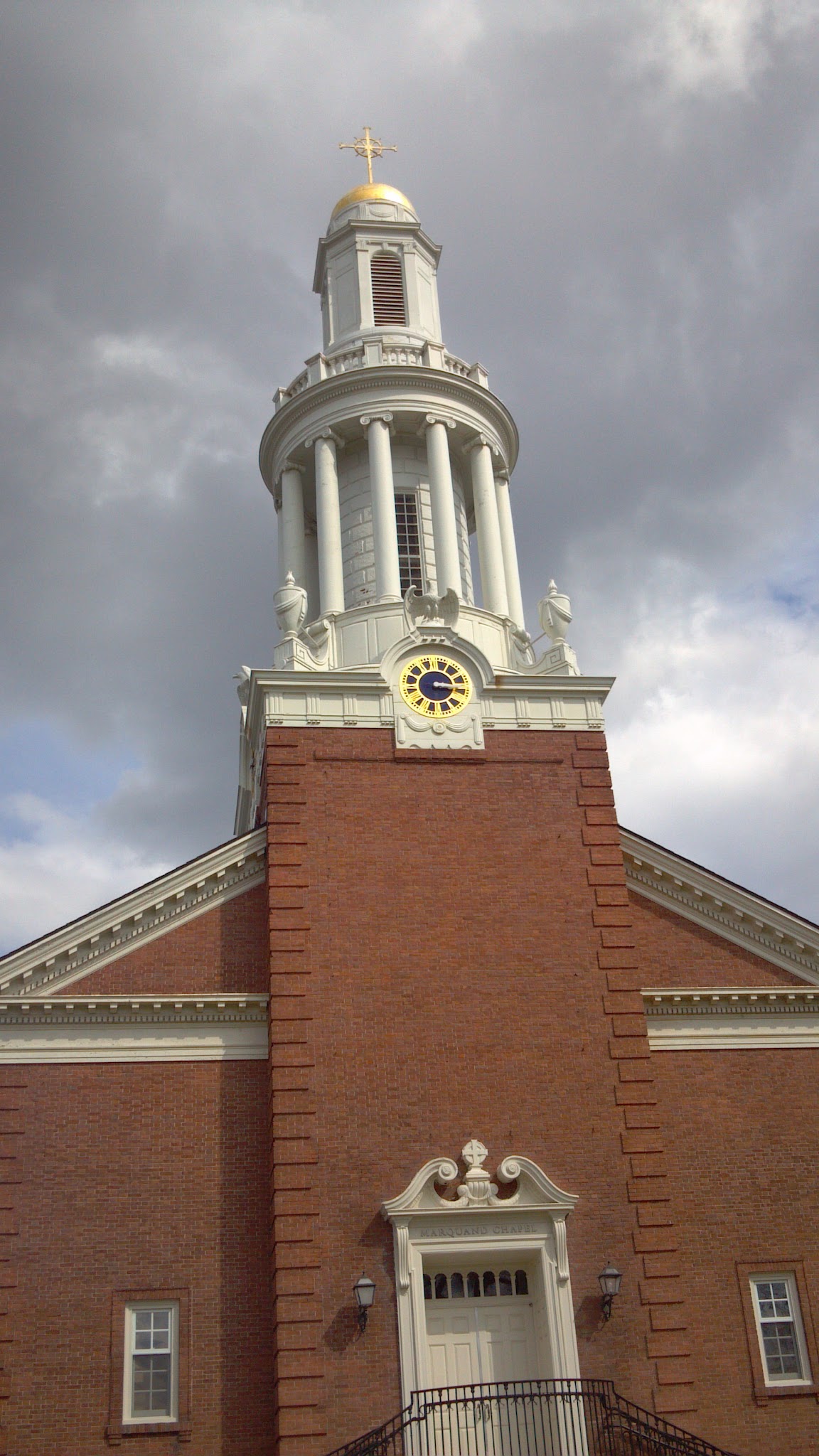
Some of you may be wondering when my next post is coming. I have been at the Jonathan Edwards Center at Yale Divinity School this week doing research for my PhD thesis. My regular posts will resume at the beginning of next week. Dr. Ken Minkema, the Executive Director of the JEC and the Executive Editor of the Works of Jonathan Edwards is in the world of Edwardsian studies the equivalent to who Yoda was to the Jedi. He has been a gracious and generous host this week. I am very grateful to have him as a friend and mentor as I go through the process of writing my thesis.
I suppose having brought this up, some may be interested in what exactly I am doing.
The issue, what does the god-centered life look like, weighed heavily on Edwards’ mind throughout his career. It is therefore ironic that while Edwards has long been celebrated for his rational theology and keen insight into the Scriptures, comparatively little has been said about how he set about to teach and model that practice to others.
Edwards’ definition of theology, “the doctrine of living to God by Christ,” was the lens through which he discerned his goals as a pastor, husband, father, and mentor. While essential to the Christian life, Edwards’ saw speculative knowledge as a means to an end: “practical knowledge” or Christian practice.
Edwards’ thoughts on practical theology are akin to what today we would call spiritual formation, which has become a key area of interest in the Church today. The issue of spiritual formation was central to everything Edwards preached, wrote, and taught. This was the reason he always had an application section in his sermons, a section that was often longer than the introduction and doctrinal sections combined. It was the main focus of his longer sermon series such as “Charity and Its Fruits” and his recently published nineteen-sermon-series on the Matthean parable of the Ten Virgins. It is the subject of several of his key published works such as Distinguishing Marks, and Religious Affections. I believe that Edwards has a lot to offer the contemporary church on this subject.
While these works and sermons that deal with Christian practice have been much commented on, the focus of such works to date have leaned much more in the direction of appreciating the speculative or rational side of these works than the practical side, which for Edwards, was the thing he was aiming for.
Thus there are two purposes that drive and direct my study. The first is historical: to explore the pivotal place that the knowledge of Christian practice, or as Edwards called it, “practical knowledge,” played in influencing his philosophy of ministry as a pastor, and his self-identity as a husband, father, and mentor. The second is theological: to invite the Church to revisit the way theology is currently defined in light of Edwards’ teaching, so as to clearly highlight the relationship between the two parts of theology: thought and practice.
I have completed the first chapter and am working on the next 3 which are all related. I don’t want to get anymore academic than I already have here, but if you are interested please feel free to leave a comment and I will speak to your heart’s content.
Grace,
Dan

 Learning To Be Full Of Grace And Truth.