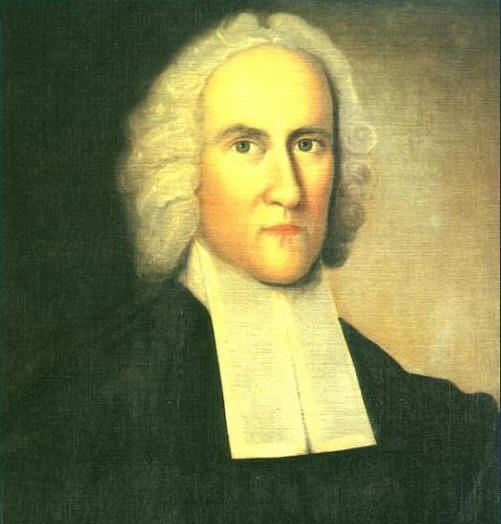
This past week I was down at Yale for the annual summer course on Jonathan Edwards. You can imagine that some of the people in attendance would be pastors from reformed traditions who love Edwards for his strong, biblical theology and his uncompromising preaching and teaching methods. I would count myself among them.
At one point some one raised the interesting question, “would Edwards peach and teach the same way today?” Conversation soon turned to the Biblical illiteracy of the average person in the pew as compared to Edwards’ day, and how disappointed he would be seeing How far people had fallen in knowledge and practice.
I don’t think Edwards would be impressed either, but I don’t think he would lay the fault at the feet of the congregation. Edwards would be much more concerned that the leadership allowed things to go so far.
Edwards had a very high view of the pastorate and the pastor’s responsibility to the people in his congregation. In his sermon, The Great Concern of a Watchman for Souls, given at the ordination of Jonathan Judd (a minister whose new congregation was going to include some families from Edwards own congregation) He expresses the great responsibility that ministers have before God regarding what happens to the souls God places in their care (The Works of Jonathan Edwards, vol. 25, pp.69-70).
Christ’s committing souls to ministers’ care and charge, and betrusting them with them as servants or stewards, necessarily supposes them to be accountable to their master with respect to the charge committed to them.
He that has a treasure committed to him by the owner, and takes the care and charge of it, not as his own possession, but only to improve or keep for an appointed time, for him to whom the proper possession belongs, must return that treasure to the owner when his time is out, and is accountable to him how he has fulfilled that which he undertook; and if any precious jewel be missing, he must give an account of it. So must ministers give an account of the souls committed to their care.
The office and work of ministers is not to last always; their care of souls is but for a limited season; and when that is expired, they must return to their master to give an account.
After what manner they must be called to an account, may be shown in these two things:
First. The event of things with regard to the souls committed to them will be inquired into. As there are so many precious souls committed to their care by Christ, so hereafter it will be inquired what is become of those souls. As if a person has a number of precious jewels committed to him to keep; when the time of his betrustment is out, and he comes to return the entrusted treasure, the state of it will be examined, that it may be seen whether any jewel be lacking or not; and if any be missing, an account must be given what is become of it. The charge of a minister is in Scripture represented by that of a steward, to whom the householder, when going into a far country, commits his goods, and when he returns, expects that the steward should give an account of his stewardship. In such a case the householder looks into the state of his goods that he left behind under the steward’s care. The master in the parable, Matthew 25:14, etc., when he returns from his journey, has his goods, that he committed to the care of his servants, brought forth and laid before him.
Second. It will be inquired how far the event that shall be found, with regard to souls committed to them, was owning to their faithfulness or unfaithfulness in that care and watch that was appointed them. If any precious soul be found lacking, it will be inquired how this comes to pass: they must give an account what they have done with this and that soul that is missing, whether they were lost through their neglect or no: they must give an account what care they have taken, and what diligence they have used, and whether or no they can wash their hands from guilt with respect to them: it shall be examined by an eye that is as a flame of fire, whether the blood of the souls that are lost is not indeed to be found in their skirts. We find in the parable of the great supper, that the servants that are sent out to invite guests, return from time to time to their master to give him an account both of the event in their success with respect to some that they were sent to, and unsuccessfulness with regard to others; and also of their own doings and faithfulness, whereby they are clear of the guilt of their unsuccessfulness, and are commended to the gracious reward of their success (Luke 14:20–21).
When we look at the shallow faith that marks so many in the church today the problem is not out in the world, it is in the church. It is in not realizing that we pastors are not leading ourselves well and making ourselves available as examples or teaching our elders and other leaders to do the same.
Before we can lead others, weather that be as mothers and fathers in the home, or spiritual parents to those we are discipling, or as leaders in the church, we need to be leaders of ourselves.

 Learning To Be Full Of Grace And Truth.