Tuesdays with Edwards!
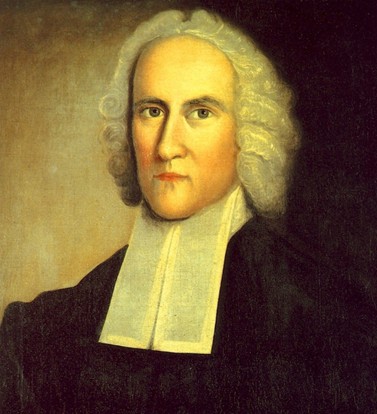
A Treatise Concerning
Religious Affections is one of Edwards’ most widely read and influential works, and has come to be viewed as a classic in Christian literature; its popularity and influence attested to by the fact that since its original publication in 1746 it has never been out of print.
Edwards outlines twelve signs which neither prove nor disprove one’s affections to be truly gracious. These are essentially false positives, things that you expect a healthy Christian would be experiencing, but are not things we should focus on to gain any assurance that the Holy Spirit is in fact at work. For each of these signs, Edwards shows why a spiritually healthy Christian would or even should exhibit these signs; and then shows why it should not be looked at as a certain sign that it is a proof of saving grace…though sometimes he reverses the order and does the negative before the positive.
Last week’s post started looking at the second of these no signs, “‘Tis no sign that affections have the nature of true religion, or that they have not, that they have great effects on the body.” In that post Edwards started by saying why very strong affections are not in and of themselves prove saving grace at work. If I had been paying more attention, I would have noticed that the “positive” argument, why a healthy Christian would be expected to have powerful affections, was only a few of sentences.
Truly, I was apparently distracted….So soon I will be posting another Tuesdays with Edwards today. =)
You can read Religious Affections in its entirety at www.edwards.yale.edu. This selection is from Religious Affections, ed. John E, Smith, The Works of Jonathan Edwards, vol. 2 (New Haven: Yale University Press, 1959) Page 135.
***
Before I leave this head, I would farther observe, that ’tis plain the Scripture often makes use of bodily effects, to express the strength of holy and spiritual affections; such as trembling, groaning, being sick, crying out, panting, and fainting. Now if it be supposed, that these are only figurative expressions, to represent the degree of affection; yet I hope all will allow, that they are fit and suitable figures to represent the high degree of those spiritual affections, which the Spirit of God makes use of them to represent. Which I don’t see how they would be, if those spiritual affections, let them be in never so high a degree, have no tendency to any such things; but that on the contrary, they are the proper effects, and sad tokens of false affections, and the delusion of the devil. I can’t think, God would commonly make use of things which are very alien from spiritual affections, and are shrewd marks of the hand of Satan, and smell strong of the bottomless pit, as beautiful figures, to represent the high degree of holy and heavenly affections.

 Learning To Be Full Of Grace And Truth.