It’s Fénelon Friday!
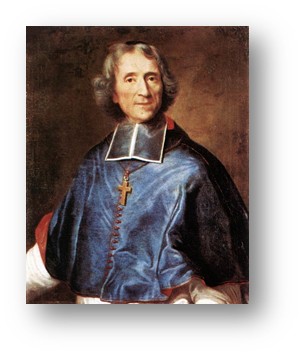
Today’s selection is another letter from the spiritual classic, Let Go, a collection of 40 letters he wrote to people he was discipling as a spiritual father.
It is important in this letter to appreciate the fact that “self-love” and “selfish love” are synonymous. The self-love that Fenelon is talking about is a private selfish love that sets the self up as our ultimate object of worship, our source of self-worth, and the audience we live for. That is the “self” that needs to die. This is what Paul was getting at in Romans 8:12-13 (NIV),
Therefore, brothers and sisters, we have an obligation—but it is not to the flesh, to live according to it. For if you live according to the flesh, you will die; but if by the Spirit you put to death the misdeeds of the body, you will live.
And in Galatians 2:19-20 (NIV),
For through the law I died to the law so that I might live for God. I have been crucified with Christ and I no longer live, but Christ lives in me. The life I now live in the body, I live by faith in the Son of God, who loved me and gave himself for me.
So when Fenelon talks about the “self” needing to die and “self-love” needing to be eradicated, he is talking about getting rid of love for self which is not born from love to God. We cannot love others unless we also love ourselves, as Jesus says in Matthew 22:39 (NIV), Love your neighbor as yourself. But this love is God centered and outward focused, not “me-centered” and inward focused.
With that in mind, here is today’s selection. It is very challenging. Don’t rush this one. Get a cup of coffee and settle in…
LETTER 10: The Discovery and Death of Self
Yes, I am happy to have you call me your father! Because I certainly am—and always will be. You only need more assurance that I love you as a father, and this assurance will come when your heart is freed from the bondage of selfish love. We are in confining quarters, indeed, when we are enclosed in self, but when we emerge from that prison, and enter into the immensity of God and the liberty of His children, we are truly free.
Though it sounds strange to say it I am rejoicing that God has reduced you to a state of weakness. Your ego can neither be convinced nor forced into submission by any other means: it is always finding secret lines of supply from your own courage: it is always discovering impenetrable retreats in your own cleverness. It was hidden from your eyes while it fed upon the subtle poison of an apparent generosity as you constantly sacrificed yourself for others. But now God has forced it to cry aloud, to come forth into open day and display its excessive jealousy. Oh, how painful, but how beneficial these times of weakness! As long as any self-love is remaining, we are always afraid it will be revealed. But God does not give up as long as the least symptom of it lurks in the innermost recesses of the heart, God pursues it, and by some infinitely merciful blow, forces it into the open. And the sight of the problem then becomes comes the cure. Self-love, forced into the light, sees itself as it really is in all its deformity and despair and disgrace. And in a moment, the flattering illusions of your whole selfish life are dissipated. God sets before your eyes your idol: self. You look at that spectacle and you cannot turn your eyes away. Nor can you hide the sight from others.
To expose self-love in this way without its mask is the most mortifying punishment that can ever be inflicted. We no longer see self as wise, prudent, polite, composed, and courageous in sacrificing itself for others. It is no longer the old self-love whose diet consisted in the belief that it had need of nothing, and deserved everything. It weeps from the rage that it has wept. It cannot be stilled, and refuses all comfort, because its poisonous character has been detected. It sees itself foolish, rude, and impudent, and is forced to look its own frightful countenance in the face. It says with Job, “For the thing I greatly feared is come upon me, and that which I was afraid of is come unto me” (Job 3:25). For it is that which it fears most that will be its destruction.
We have no need that God should attack in us that which is lifeless and unresponsive. (It is the living only that must die). Nothing else matters. So you see why I rejoice in your state of weakness. This is what you needed—to behold a self-love defeated, sensitive, impure, and exposed posed for what it really is. And now all you have to do is to quietly look at it as it is. The moment you can do this, self will disappear.
You asked for a remedy, that your problems might be cured. You do not need to be cured, you need to be slain. Quit looking for a remedy and let death come. This is the only way to deal with self. Be careful however of that bitter bravery that decides to accept no remedy, for this itself may become a remedy in disguise, giving a type of satisfaction and comfort to your ego. Do not seek any comfort from self-love, and do not conceal the disease. Uncover everything in simplicity and holiness and then allow yourself to die.
But understand that this is not done by any exertion of your own strength. When you finally see self for what it is, weakness has become your only possession. Strength is not even in the picture. And if you had any, it would only make the agony longer and more distressing. If you die from weakness and weariness, you will die more quickly and less violently. A dying life must of necessity be painful. Kindnesses are a cruelty to one who is being tortured to death. All he longs for is that one fatal blow—not food, not sustenance. In fact, if it were possible to weaken him even further and hasten his death, we would be shortening his sufferings. But we can do nothing. Only the hand that tied him down to that place of torture can deliver that fatal blow that will set him free.
So do not ask for either remedies or sustenance. Do not even ask for death. To ask death is impatience. And to ask food or remedies is only to prolong the agony. What, then, shall we do? Do nothing. Seek to nothing. Hold to nothing. Simply confess everything, not as a means of getting relief, but because of humble desire to yield unto Jesus.
Though I am your Father in the Lord, do not look to me as a source of life. I would rather have you consider me as a means of death to your love of self. For just as surgical instruments would fail in fulfilling their purpose if they did not minister to life, so an instrument of death would be falsely named if, instead of slaying, it kept alive. For the time being, I would be that instrument of death. If I seem to be hard, unfeeling, indifferent, pitiless, wearied, annoyed, and contemptuous, God knows how far it is from the truth. But He permits me to seem this way. And I shall be much more serviceable to you in this false and imaginary character than were I to show my real feelings and very human desire to help. You see, the point is not how you are to be sustained and kept alive, but how you are to give up and die.
Francis Fénelon, Let Go (New Kensington: Whitaker House, 1973).

 Learning To Be Full Of Grace And Truth.