My mentor, Charlie Jones, used to tell me that it was important to “see it big, and keep it simple,” because it is in our nature to narrow our vision and make things more complicated.
There is nothing wrong with digging into the details as long as we don’t lose sight of the big picture. When we fixate on things, they get bigger to us. By stepping back and looking at the big picture, we can get a better perspective on it in relation to everything else.
One of the first things you learn while taking art lessons is not to get focused on one area of a drawing. When you do that, you almost guarantee that what you focused on will be bigger than it should be and will force you to start over or distort the rest of the picture to compensate for it.
Let me give an example. What is love? Certainly the common understanding of love today is that it is an emotion. That understanding of love gets people into a lot of trouble, because when the thrill is gone, the belief is that the love is gone. The Church’s reaction to this shallow view of love has been to define love not as a feeling, but as an action or commitment. Certainly there is biblical warrant for seeing love as an action, but to say that love isn’t a feeling or emotion is just as unbiblical. 1 Corinthians 13 describes love as being both actions and feelings. You get into trouble thinking it is one or the other. Both seeing love as a feeling and seeing it as an action lose sight of the big picture.
Another example is theology. Have you ever thought about what theology is? If you walk into a typical mainline pastor’s office and ask that question, you will probably hear that theology is about what we do and how we act as a Christian community in the world. Theology is “faith seeking understanding” for bringing God’s grace and love to the world through being involved in social justice ministries: helping the poor, feeding the hungry, standing up for the oppressed, and working with the sick.
However if you were to walk into a typical evangelical pastor’s office, you would probably hear that theology is “the study of the knowledge of God.” Theology is not so much about how the Christian lives, but how the Christian thinks about God. The point of theology is to rightly understand God’s Word so that we have a true idea of who He is, who we are, and what He is doing.
The former gauges Christianity primarily on what you are doing, while the later gauges it primarily on what you believe. The question I want to ask today is: which of these views squares with Scripture?
Take a look at James 2:14-26 (NIV),
What good is it, my brothers and sisters, if someone claims to have faith but has no deeds? Can such faith save them? Suppose a brother or a sister is without clothes and daily food. If one of you says to them, “Go in peace; keep warm and well fed,” but does nothing about their physical needs, what good is it? In the same way, faith by itself, if it is not accompanied by action, is dead.
But someone will say, “You have faith; I have deeds.”
Show me your faith without deeds, and I will show you my faith by my deeds. You believe that there is one God. Good! Even the demons believe that—and shudder.
You foolish person, do you want evidence that faith without deeds is useless? Was not our father Abraham considered righteous for what he did when he offered his son Isaac on the altar? You see that his faith and his actions were working together, and his faith was made complete by what he did. And the scripture was fulfilled that says, “Abraham believed God, and it was credited to him as righteousness,” and he was called God’s friend. You see that a person is considered righteous by what they do and not by faith alone.
In the same way, was not even Rahab the prostitute considered righteous for what she did when she gave lodging to the spies and sent them off in a different direction? As the body without the spirit is dead, so faith without deeds is dead.
Notice what James does here. First, in verses 14-17 he makes it very clear that faith, what we believe, is genuine only if it is accompanied by works. If we see a brother or sister without food or clothing and only respond by saying, “I’ll pray for you,” our faith is dead. It is false. It is useless.
In verses 18-19 he then rebukes the thought that faith is only about having correct knowledge about God. You believe that there is one God. Good! Even the demons believe that—and shudder.
But then in verses 20-26, he argues the truth that faith shows itself in action by his knowledge of Scripture and what it tells him about who God is, who we are, and what He is doing.
As you might expect, when asked to choose between “A” or “B,” I have been learning that the answer might well be “both A and B.” Theology is not what we believe or what we do, but both. James himself confirms this in verse 22, You see that his faith and his actions were working together, and his faith was made complete by what he did. Abraham’s faith was proved to be genuine because what he believed about God was made complete by what he did.
Jonathan Edwards understood this well. He defined theology as “living to God by Christ.” Edwards defined it that way because theology,
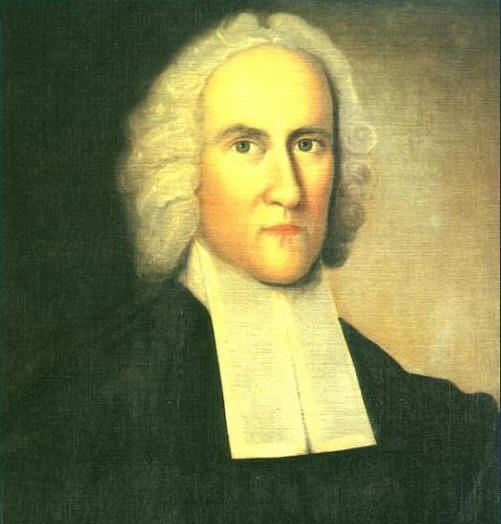
comprehends all Christian doctrines as they are in Jesus, and all Christian rules directing us in living to God by Christ. There is nothing in divinity [i.e., theology], no one doctrine, no promise, no rule, but what some way or other relates to the Christian and divine life, or our living to God by Christ. They all relate to this, in two respects, viz. as they tend to promote our living to God here in this world, in a life of faith and holiness, and also as they tend to bring us to a life of perfect holiness and happiness, in the full enjoyment of God hereafter (The Works of Jonathan Edwards, vol. 22, Yale University Press, 2003, page 86).
Theology is centered around the Christian’s relationship with God through Christ; it is “living to God by Christ.” Because it is relational, theology must be rational. To be in a relationship with God we need to have correct knowledge about God and Jesus Christ, our duty to Him, and about our relationship with Him. Because theology is about our relationship with God through Christ, theology is also practical. It is practical in that its goal is practice, “living to God by Christ.” It is not either or, but both and.
You need to pursue good sound biblical knowledge about God. You have to have knowledge about God before you can have any kind of relationship with Him. That’s true about anything right? If you have no idea that a person exists, you can’t have a relationship with them. Before you can relate to anybody you need to have some idea of them in your head.
The only place to get knowledge about the kind of Person God is, is the Bible. Paul says in Romans 1:20 (NIV) since the creation of the world God’s invisible qualities—his eternal power and divine nature—have been clearly seen, being understood from what has been made, so that people are without excuse. But the only place to learn about the holiness of God, the fact that we are sinners who will either be judged and punished for our sins or forgiven through faith in Jesus, is by getting that knowledge from God’s revelation of Himself in Scripture. That is what makes sound biblical knowledge so essential to the Christian life. Before we can live to God by Christ, it is necessary to have a correct understanding of who God is, of who Christ is, why Christ is needed, and what God expects from us in a relationship with Him.
We need to not have just any knowledge about God, but true knowledge about God if we are going to be in relationship with Him. Again, that is true about any relationship isn’t it? I can’t expect to have a good marriage with my wife if I don’t have true knowledge about what is important to her, what she likes and dislikes, how she communicates, and how I need to communicate with her. The same is true with God. He has told us in Scripture who He is, what is important to Him, what He is doing, and how He wants us to relate to Him. We need to know that if we are going to be in a healthy relationship with Him. Scripture makes it clear that we need to be careful about what we think of Him. Paul says in 2 Timothy 4:2-4 (NIV),
Preach the word; be prepared in season and out of season; correct, rebuke and encourage—with great patience and careful instruction. For the time will come when people will not put up with sound doctrine. Instead, to suit their own desires, they will gather around them a great number of teachers to say what their itching ears want to hear. They will turn their ears away from the truth and turn aside to myths.
We need to be in a constant pursuit of good doctrine. We should take to heart the direction of Jonathan Edwards who said,
It becomes one who is called to be a soldier, and to go a warfare, to endeavor to excel in the art of war. It becomes one who is called to be a mariner, and to spend his life in sailing the ocean, to endeavor to excel in the art of navigation. It becomes one who professes to be a physician, and devotes himself to that work, to endeavor to excel in the knowledge of those things which pertain to the art of physic. So it becomes all such as profess to be Christians, and to devote themselves to the practice of Christianity, to endeavor to excel in the knowledge of divinity hereafter (The Works of Jonathan Edwards, vol. 22, Yale University Press, 2003, page 96).
But we must not lose sight of the big picture. The point of having correct knowledge of God in our heads is so that God can take that knowledge and drop it into our hearts. For it is what we love, what we are attracted to, and what we desire that motivates our actions.
This is what James was getting at in our passage. Good doctrine is necessary for faith, but it is not the proof of it. The proof of faith is not what we believe but how we live to God by Christ. It is how we love one another, care for one another, forgive one another, help one another, serve one another, and encourage one another. You can’t live for God by Christ if you don’t have right knowledge about God and Christ, but if your doctrine does not result in action, as James says, your faith is dead.
No one can accuse Jonathan Edwards of not caring about having good sound biblical doctrine, but he echoes James saying that as important as good doctrine is, if it does not lead to holy living, it “is in vain and to no purpose, but to make our condemnation the greater.” It is not either or but both and.
Here are a few thoughts on how to apply this.
First, be very careful about how you talk about and relate to other Christians with whom you doctrinally disagree. Be careful that you do not let your pride pick and choose your words and actions for you.
I am a member of “CA,” Calvin Anonymous. I joined CA when I realized I had Calvin Fever. “Calvin Fever” is a disease wherein one’s Calvinism manifests itself by judging everyone else based on how well you judge they understand and articulate the tenants of Reformed Theology: the sovereignty of God, total depravity, limited atonement, predestination, etc.
You start to believe that to be a Christian means to be a Calvinist, and so to depart from Calvinism is to depart from Christ. It fools the effected person into believing that this judgmental and prideful attitude is actually godly and righteous zeal. When you are reviled for hurting people’s feelings or making them feel stupid, or that they are not as holy as you, you rejoice because you are suffering for Christ. Have any of you ever met someone with Calvin Fever?
I finally owned up to my affliction when my wife led an intervention my behalf. The intervention revolved around how I was treating our friend Ralph Fraser. Ralph was a Bible student at the very Arminian Eastern Nazarene College in Quincy.
Needless to say, Ralph did not share my Reformed views. He had no problem standing for his own beliefs and chilling my own. One time he sent me a cartoon of John Calvin mixing chemicals in a lab with a caption that read, “John Calvin invents predestination.” This only served to increase my attacks on his “unbiblical and semi-pelagian-arminian” beliefs.
Our relationship was becoming threatened by my misplaced zeal. I had to face the fact that I was letting my doctrine—my love for my doctrine—overshadow my love for my brother Ralph. And I almost lost our friendship over it, that’s how bad it got. My relationship with him was not turning out to be an example of Christian love, it was turning out to be a show of whose doctrine was better. What I thought was standing for the truth and suffering for Christ for the love of my brother, was really more about proving I was right than being loving.
Remember what Paul said, If I have the gift of prophecy and can fathom all mysteries and all knowledge, and if I have a faith that can move mountains, but do not have love, I am nothing (1 Corinthians 13:2, NIV). If you are unloving, it really doesn’t matter how right you may be.
Second, remember that what you believe about God is important. It can be right, and it can be wrong. Theology is living for God by Christ. You can’t do that if you don’t know who God is, who Christ is, what God is doing, and how God wants you to live for Him. When we don’t take the time and effort to get that knowledge about Him from His revelation about Himself in Scripture, we end up not living for God by Christ, but living for ourselves in spite of Christ. When we allow our own passions, desires, or interests to be the deciding factor in what we do, who we help, and what we support, instead of submitting to God’s passions, desires, and interests, we end up being no better than the Pharisees. If that is how we think, what Jesus said to them us no less true of us, These people honor me with their lips, but their hearts are far from me. They worship me in vain; their teachings are merely human rules (Matthew 15:8-9, NIV).
We need to pursue both good doctrine and holy practice if we are going to live to God by Christ. It is not either or, but both and.

 Learning To Be Full Of Grace And Truth.